


Hello to all bikers out there! The wait is finally over: Ride 6 is out tomorrow, and it’s time to rev up and start a new adventure. Over the past two years, we’ve poured our hearts into creating an experience that celebrates every aspect of motorcycle culture. Today, we’re excited to pull back the curtain on one of the pillars of this new chapter: how we brought over 40 tracks to life in the game.
As you know, Ride 6 features both real-world and fictional tracks, each crafted with utmost care. Our teams worked hard to recreate iconic locations that have shaped motorcycling history, while also designing completely original tracks that are just as memorable and fun to ride.
For real tracks, the process starts on location. We map the entire circuit from above using drones, capturing anywhere from 2,000 to 2,500 photos depending on the size and complexity of the track.
Before flying, we set up 20–25 Ground Control Points (GCPs). These are PVC panels marked with an “X”, and we record their exact positions with high-precision GPS antennas. Once the photos are taken, we link each GCP to every image it appears in, attaching the corresponding GPS coordinates. This method allows us to generate point clouds with an impressive margin of error of just 2.5 cm.

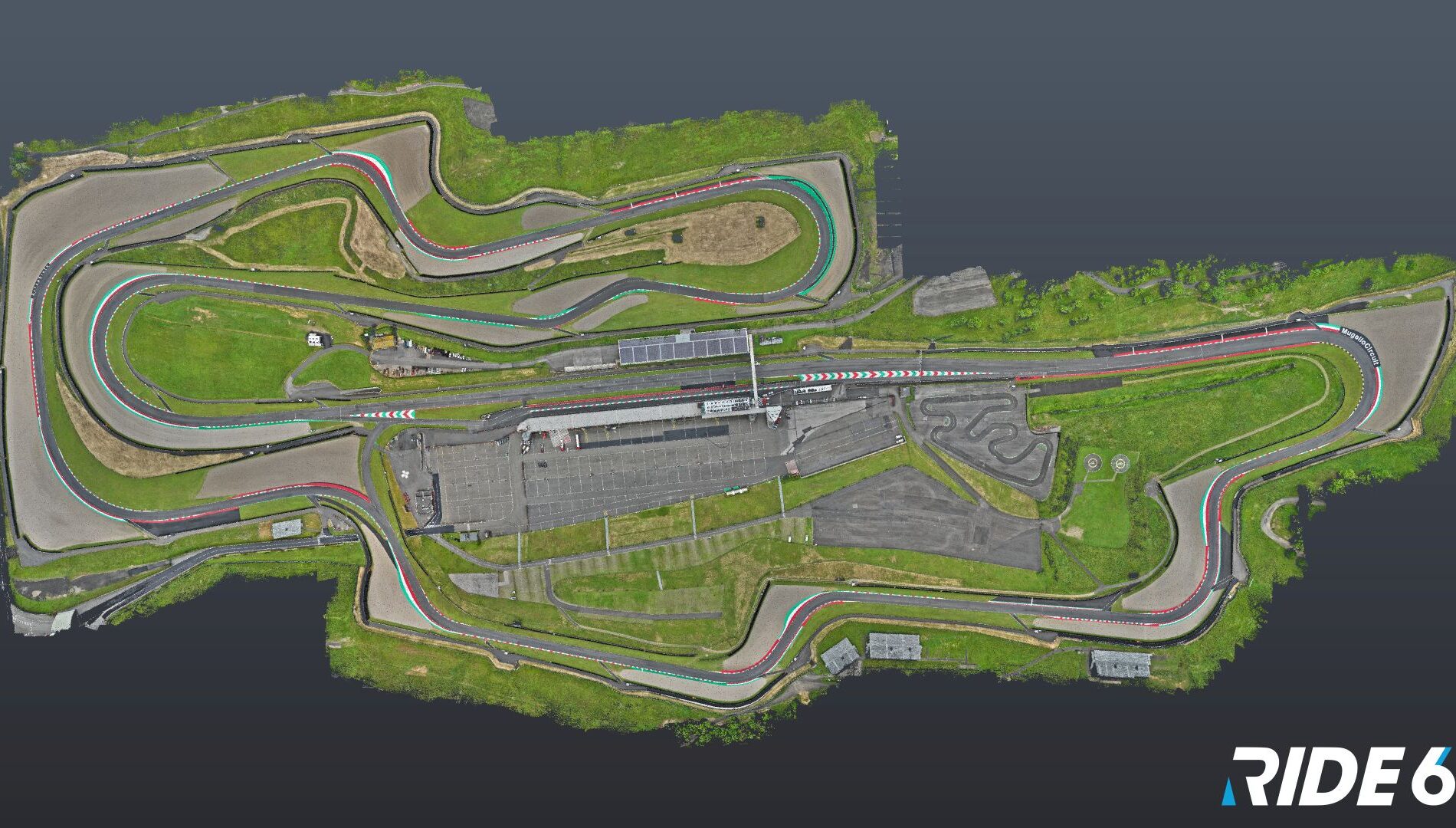
The resulting point clouds don’t just capture the asphalt, curbs, and paddock; they map everything inside and around the track. This detail is crucial for faithfully recreating vegetation, run-off areas, asphalt, and structures like grandstands. Once the point cloud is ready, it’s handed to the Art Team, who use it as the foundation for building the 3D model.
Creating fictional tracks is a whole different story. Here, imagination takes center stage. The design process begins with the experience we want to deliver and the type of bike that suits the track best. The Design Team works closely with the Physics Team to ensure each track highlights the bikes’ strengths while also challenging riders in the right ways, striking the perfect balance between fun and skill.
Some tracks are designed to be fast and flowing, ideal for newer players eager to unleash the full power of their bikes. Usually, these tracks feature long straights, wide corners, and generous lanes to help players get comfortable with the gameplay. In this sense, the Kapadokya Rally is a great example: a gift to off-road enthusiasts, offering a nearly rally-like experience.

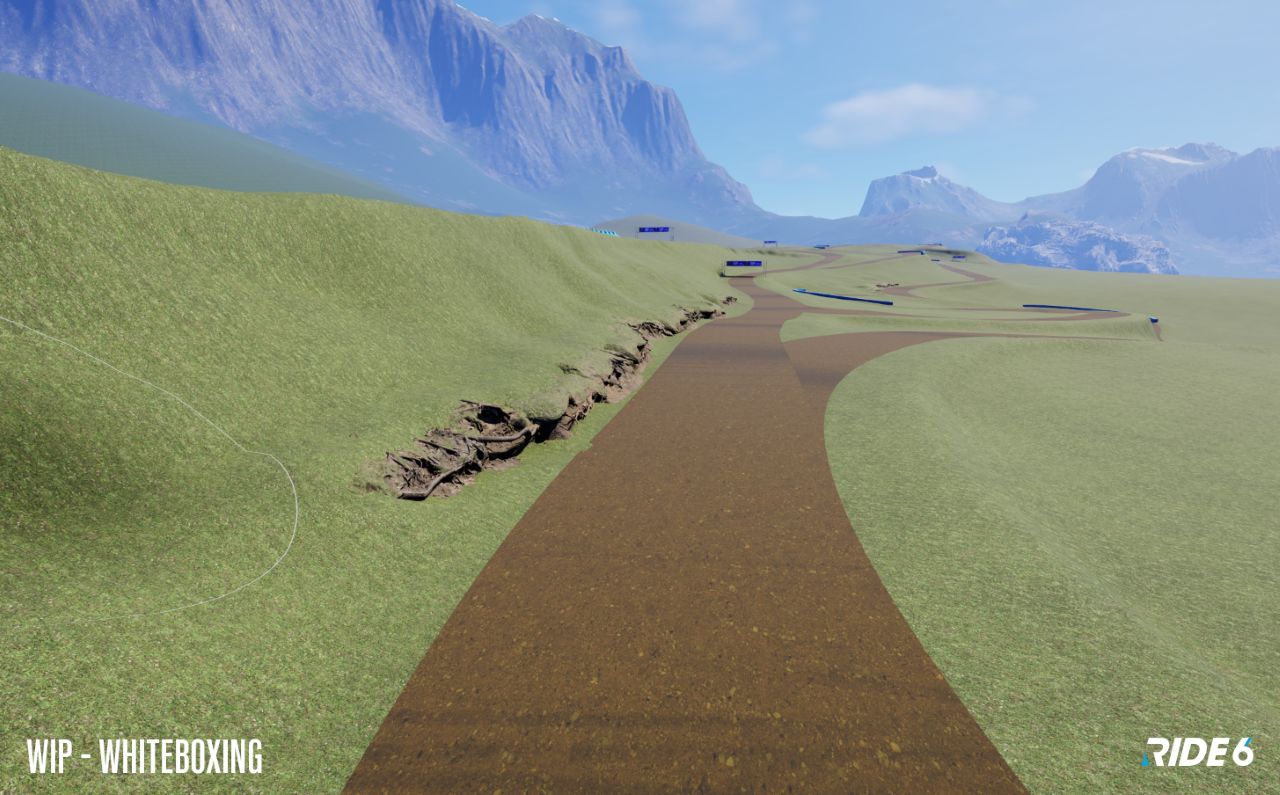
Other tracks are tighter, more technical, and aimed at experienced players. The environment we choose plays a key role in this sense, as it strongly affects the overall feel of the track. A circuit winding through a dense forest, for example, gives a far stronger sense of speed than the same layout in an open area. This is something we consider from the very beginning of the design process.
Once the design is finalized, we move on to practical testing. This is a unique phase: the Gameplay Team rides on a completely empty environment, a strip of asphalt floating in space with no reference points. The goal is to give the Design Team feedback on how to refine the layout and make the track as enjoyable as possible. Reference points like a house, a road sign, or a curb are now added to help players find racing lines, learn braking points, and fully immerse themselves in the ride. From here, the Art Team takes over to bring the track to life in 3D.
Thanks for stopping by. I hope you learned something interesting. See you on the track when Ride 6 launches February 12!