


Warning: This article contains spoilers for one puzzle from the game!
When we began the game design process for this sequel, we had a clear goal in mind: Create deeper and more elaborate mechanics and puzzles, while at the same time maintaining the flow and accessibility of the first game.
To achieve this goal, we knew we wanted to give the player more control, and expand on Mui’s special hypnotize ability from the first game.

Using the environment as part of the challenge
In the first game, animals were controlled indirectly, by essentially constraining their position to Mui’s. In this sequel, we wanted the player to instead become the animal, controlling it freely in the world independent of Mui, and let the player experiment with its different movements and abilities.
This unleashed a whole new level of creativity and variation in the gameplay, where we could build puzzles around these new and fun animals that were lurking around in the world of Novo. One example is the tiny ink fish. Its fast and snappy movement lets it quickly navigate through the water, go through narrow tunnels, and it can even jump out of the water to reach new areas! Its special ability is that it can create an ink cloud, in which both the ink fish itself as well as Lana can hide from lurking dangers underwater.
Speaking of being under water, this is another aspect that we are introducing in this sequel. Lana can now dive down under the surface, which unlocks a whole new dimension of verticality to the puzzle design, as well as tension, because of the need to breathe.
Mui still has her fear of water, as in the first game, but now there’s a special kind of bubble plant that grows underwater in some places on Novo that Lana can fetch and tie to herself. Mui can then get inside of the bubble and together they can dive down and solve underwater puzzles!
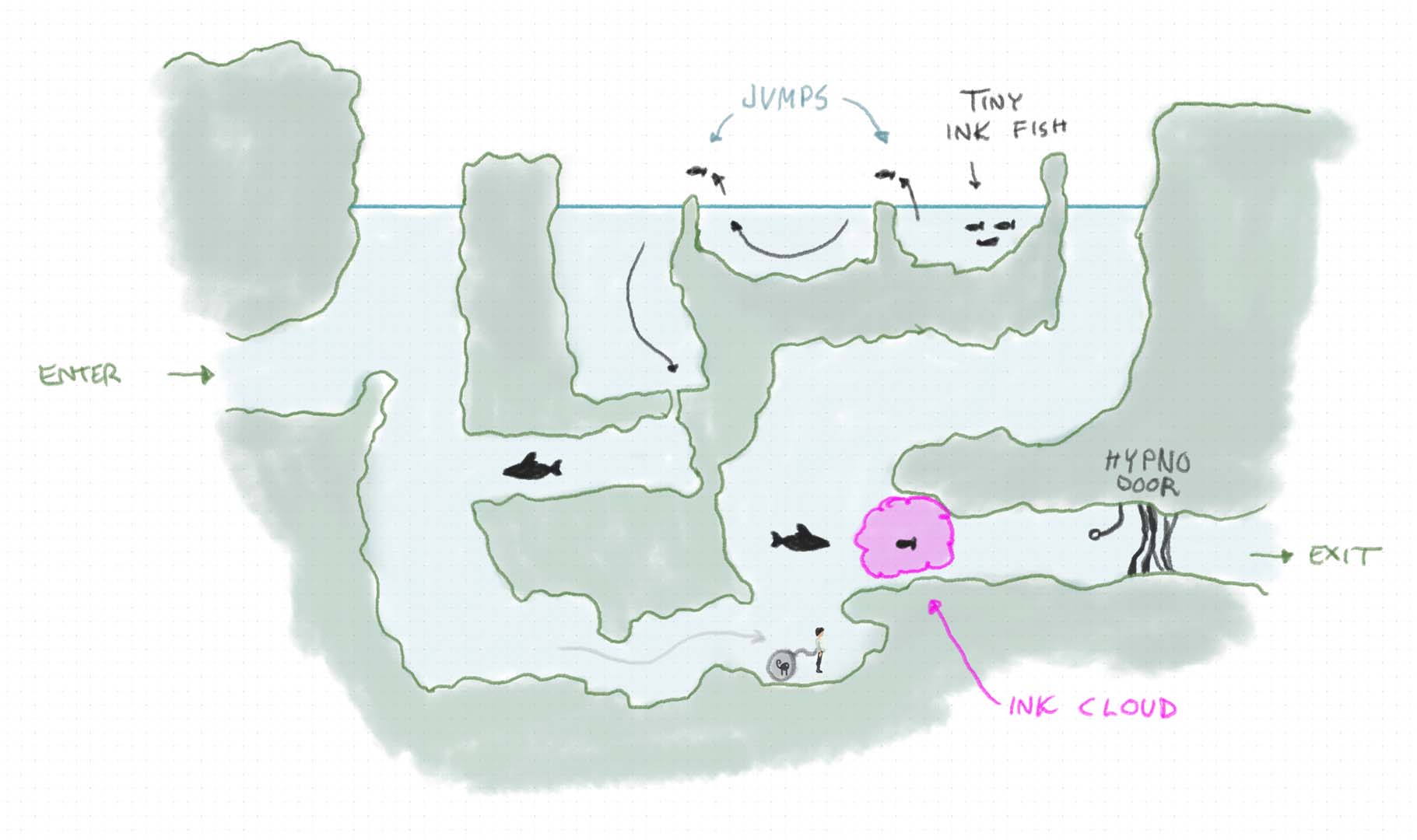
When creating a puzzle, we always start with one or more overview sketches that we present to the rest of the team. We walk through it in stages, imagining how it would be to play and asking questions. Is the goal for the player clear enough? If failing, will the player get the feedback they need in order to not get stuck? Do we present the elements of the puzzle in the right order?

Balancing between challenge and flow
Here you can see a sketch of a puzzle where Lana has found one of the bubble plants mentioned earlier, and needs to find a way to open the underwater hypno door with Mui, without being seen by the shark monsters.
At this stage, we collect valuable feedback based on the sketches, make adjustments and present it again. We repeat this process until we are certain that we are on the right track.
Then the Level Designers make a first pass building it in the engine, making sure everything can be built with the art assets we have available. Also, adjustments are made here to ensure that distances and scale feel good while moving through it in-engine.
As soon as possible, we then try to playtest it on players who have not seen the puzzle sketches. It’s important that this happens in context with the rest of the game, since sometimes a puzzle builds on elements introduced earlier, so testing it in isolation could lead to it being much more difficult than intended if too many totally new puzzle elements are introduced at the same time.
When analyzing the playtests, we look extra carefully for player confusion and frustration, to make sure we don’t break the flow of the game. Having the player not immediately progressing is not always a problem, as long as the player is having fun and is coming up with new ideas of how to solve a puzzle. It can sometimes be a fine line between a fun challenge and a frustrating experience!
As can be seen from this overview from the final game, this particular puzzle mainly kept its shape from the sketch, apart from some tweaks in proportions and distances.

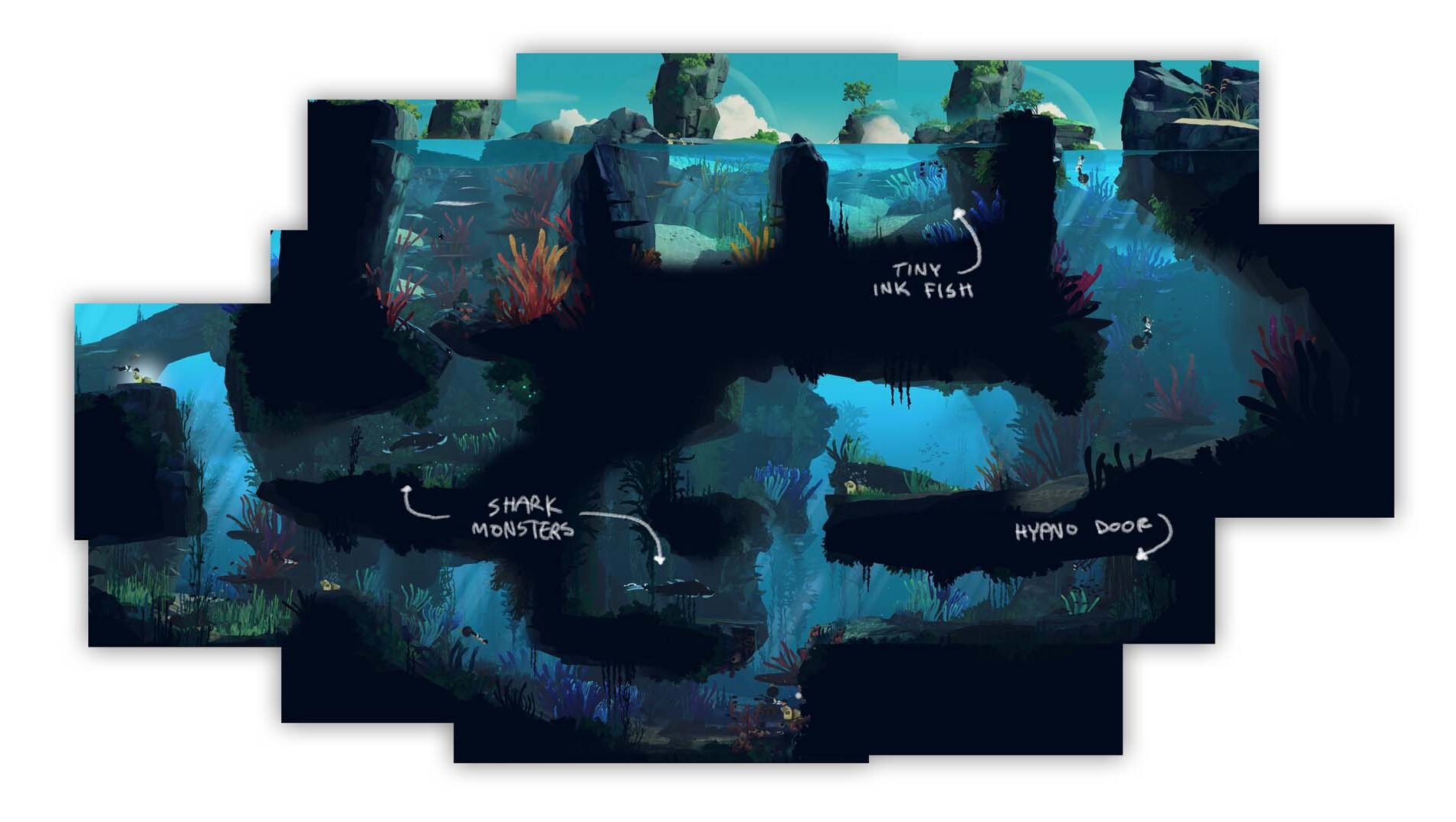
Another small difference is the extra tunnels added around the second shark monster, which were added because it made it feel more natural for players where they were supposed to place an ink cloud (at the tunnel intersection).
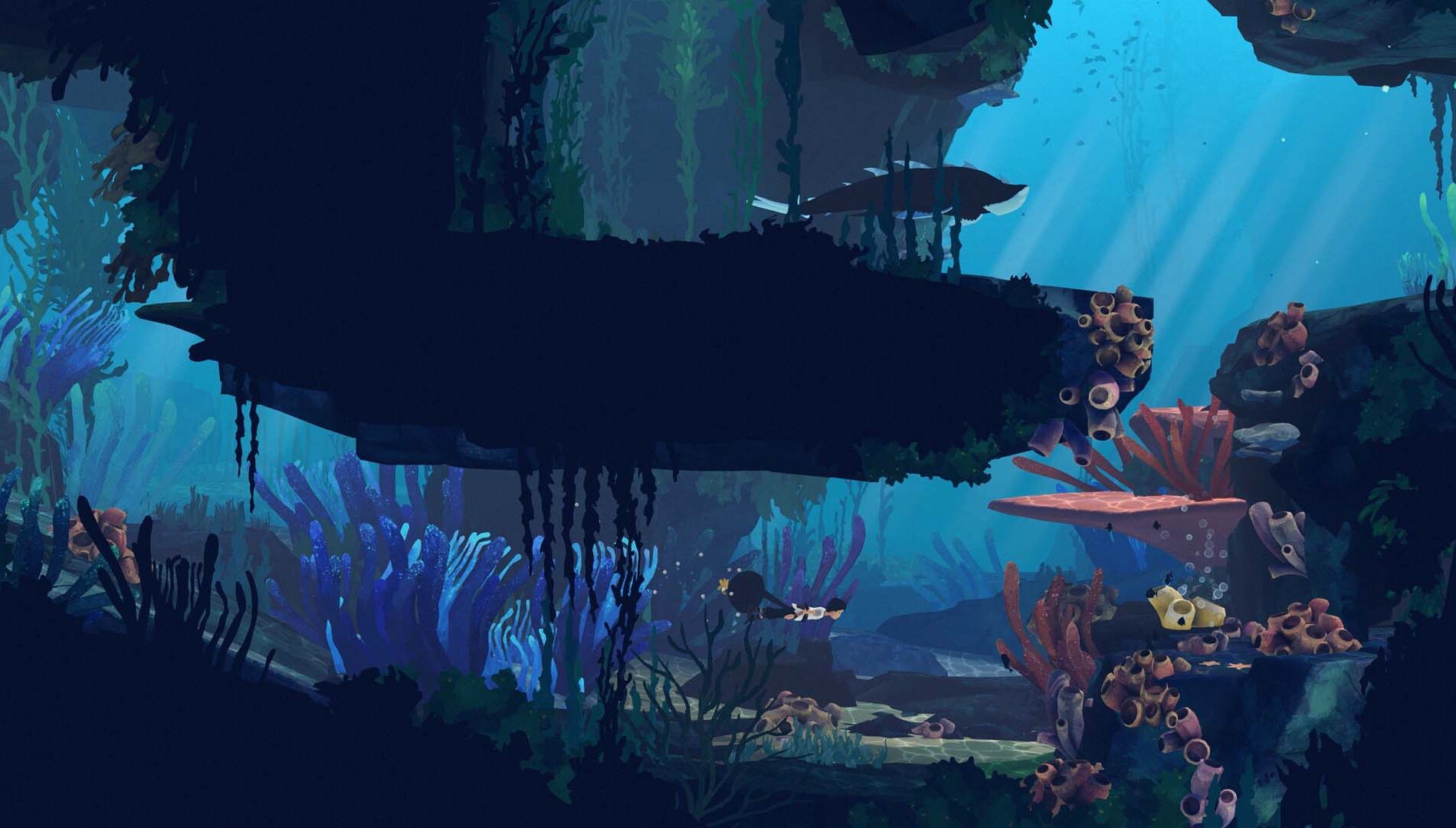
Once we see that a puzzle tests well, the Level Artists continue filling out the world with more visual details and lighting, making it more and more beautiful with each pass of polish, as can be seen in this screenshot from the same area of the game.

Thank you for the opportunity to give you a glimpse of what goes into making a puzzle. We really look forward to seeing players explore these new and exciting parts of Novo!